Making a Medication List for a Pituitary Hormone Review
A medication list can look complete while hiding the detail a clinician needs. The product name and strength answer “what is it?”; the current instruction and what you actually take answer different questions. Keeping those fields separate makes a discrepancy easier to resolve.
On this page
- Separate product identity from the instruction being followed
- Make changes and nonprescription products visible
- A discrepancy note can be more useful than a guessed answer
- Preserve both the old note and the current label
- Show a disagreement instead of quietly resolving it
- Resolve discrepancies with the responsible professional
- Sources and reading context
Separate product identity from the instruction being followed
FDA medication-list guidance includes medicine name, strength, reason for use and instructions. The printed strength identifies the product; it is not by itself a complete record of how you have been instructed to use it. Copy both fields from the current information you have. If the label and a later instruction appear inconsistent, mark the difference for clarification instead of silently choosing one. This article does not supply or calculate a dose. [1]
If the label uses unfamiliar units, start with Milligrams and International Units on Growth Hormone Labels: Questions for Your Pharmacist
Make changes and nonprescription products visible
Add over-the-counter products and supplements using their complete names. Keep allergy information and recent changes visible, including when a clinician changed or stopped a medicine. FDA explains that an updated list helps professionals identify possible medication problems and coordinate across services. A dated change log is more useful than overwriting an old entry without leaving any indication that it changed. [1]
A discrepancy note can be more useful than a guessed answer
This fictional extract shows the record structure. Product and treatment details would come from the person’s real packaging and professional instructions.
| Field | Illustrative entry | Why it stays separate |
|---|---|---|
| Product identity | Full name and strength retained in label photo dated 1 October | A traceable source replaces the vague entry “thyroid medicine” |
| Label instruction | The dispensing label is available in the same folder | Preserves the existing written instruction |
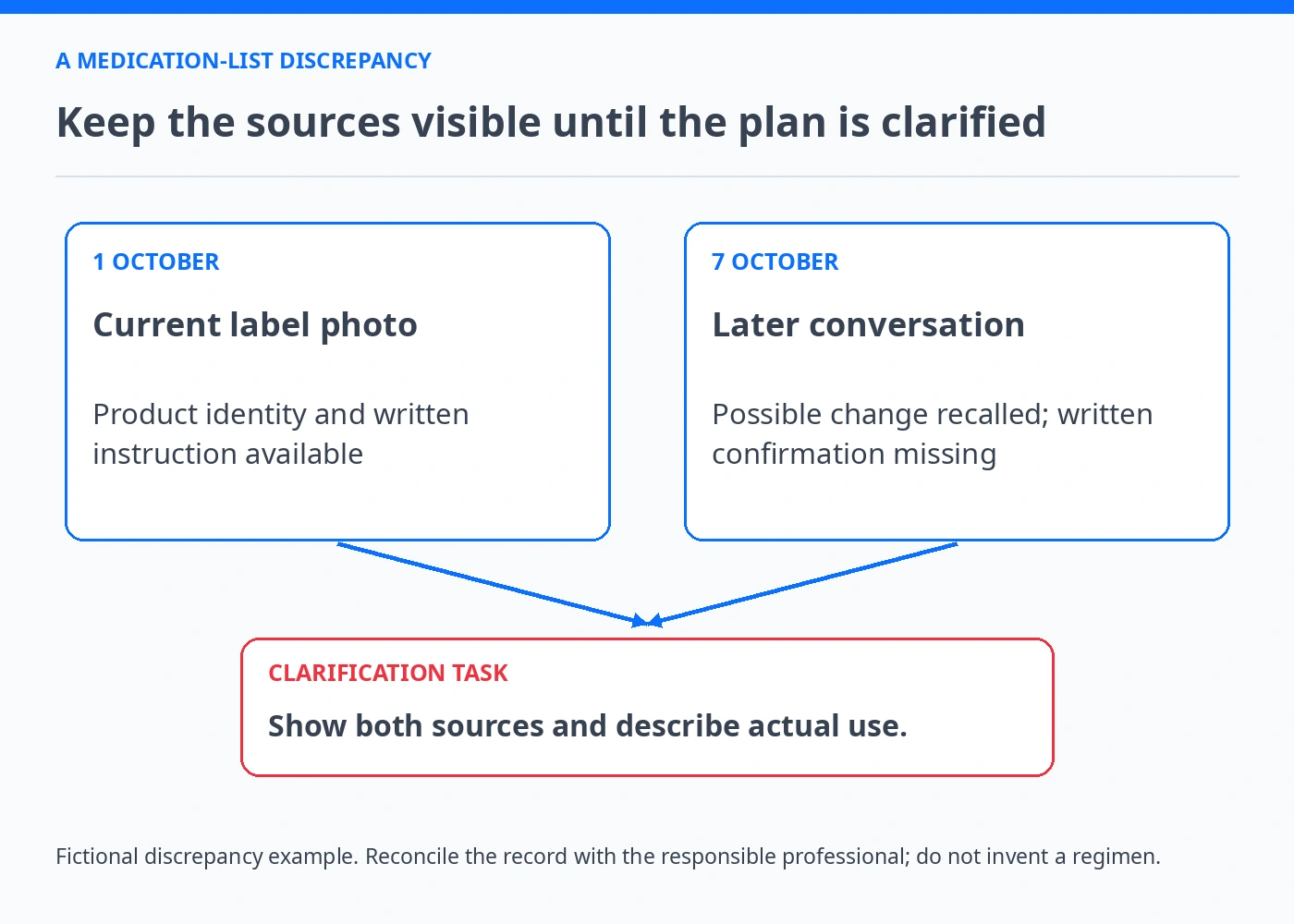
| Later conversation | Possible change discussed on 7 October; written confirmation missing | A recollection is not silently treated as the confirmed plan |
| Actual use | Still following the dispensing label; unsure whether the 7 October discussion changed the instruction | Reveals a discrepancy rather than concealing it |
| Unresolved task | Contact dispensing pharmacy/prescriber to reconcile the records | No self-selected medicine change |
Preserve both the old note and the current label
The old list says “thyroid medicine”; the current box provides the full identity. The patient adds the label image and flags an uncertain later instruction instead of guessing which source supersedes the other.
At the review, the professional can distinguish the product-identification problem from the instruction problem. Once clarified, the patient records the confirmed plan, its source and date, while retaining the earlier discrepancy as history.
Show a disagreement instead of quietly resolving it
If a label, an old list and a later conversation do not agree, keep all three sources visible. Record which instruction you have actually been following and any missed or changed use in your own words. Ask the responsible professional to reconcile them; do not edit the list into a neat agreement that never happened.
Bring the package, pharmacy record or a private label photograph when the name or strength is uncertain. After the review, date the corrected list and keep the source of the change. This makes it clear which instruction is current and how it was confirmed. [1] [2]
Bring the updated list with the wider information in Preparing for a First Adult Pituitary Appointment
Resolve discrepancies with the responsible professional
This is a record-keeping guide, not an interaction checker or prescribing tool. Medication, supplement and test-preparation changes need advice from the responsible professional.
Sources and reading context
- FDA medication-list guidance — Organization of existing prescribed instructions, OTC products and supplements; not prescribing advice
- AHRQ preparation for healthcare appointments — Organize concerns, questions and medicines for discussion