Seeking an Endocrine Second Opinion: Organizing Your Questions and Records
Two endocrine opinions may sound different because they are answering different questions—or because one clinician has a report the other has not seen. Put the uncertainty and the shared records in front of both teams before reducing the discussion to “one says yes, one says no”.
On this page
Name the decision or uncertainty
HealthLink BC describes second opinions as potentially helpful for uncertain diagnoses, important treatment choices or questions about how well an option may work. Write the issue in one sentence, such as “I want to understand the reasons for the proposed next assessment.” Separate this from a request for a predetermined answer. The service can then see whether you need clarification, a reassessment or discussion of alternatives. [1]
Check the inputs before comparing the conclusions
HealthLink BC recommends transferring the relevant records and sharing a second opinion with the original clinician. Make a short list of what each team actually had. A report that exists in your folder may still be missing from one consultation. Ask whether a new result or a different clinical question explains part of the difference.
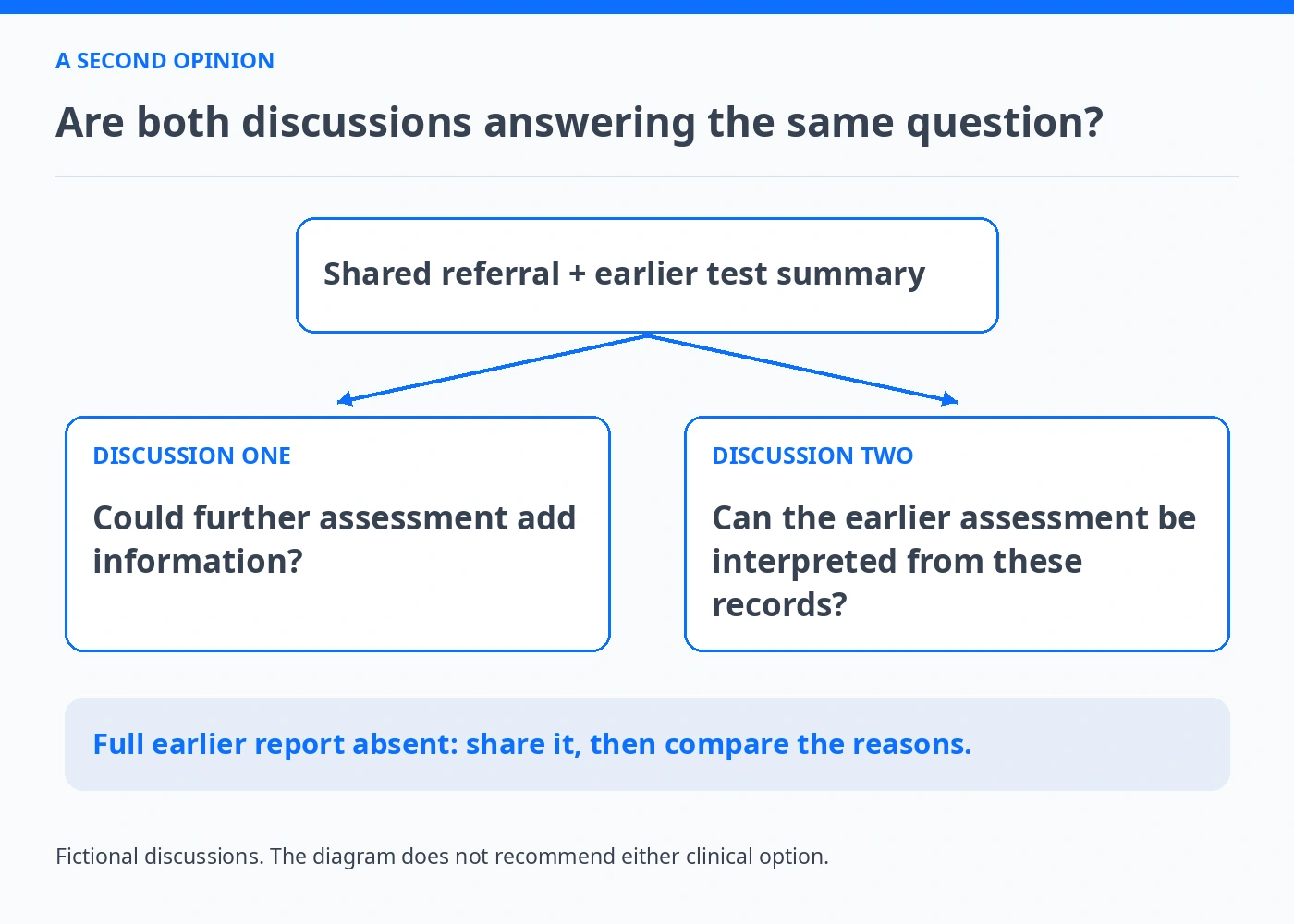
Then compare the reasons given, not just the proposed action. The fictional example below shows one discussion about whether further assessment may be useful and another about whether an older test was performed under interpretable conditions. Both conversations can matter, but they are not yet answers to one identical question. [1]
Compare the question and the evidence first
These fictional discussions illustrate an information gap; they do not recommend either clinical option.
| Item | First discussion | Second discussion |
|---|---|---|
| Question addressed | Could further assessment help explain the referral concern? | Can the earlier assessment be interpreted from the records supplied? |
| Records available | Referral and summary of earlier testing | Referral and summary; full earlier report still absent |
| Reason recorded | A new assessment may add information | Full earlier report needed before evaluating its meaning |
| Useful next step | Share the full earlier report with both teams | Ask whether that changes either explanation |
A difference becomes a question you can ask
Instead of “Which doctor is right?”, ask: “You seem to be addressing different parts of the problem. Once both teams have the complete earlier report, which uncertainties remain?” This invites a comparison of reasoning without deciding in advance which recommendation should win.
If more than one reasonable option remains, discuss expected benefit, uncertainty, burden and your preferences. Confirm who is responsible for the next step so a second opinion does not leave follow-up ownerless.
If records must move between services, use What Information Helps an Adult Pituitary Referral
When opinions involve results from different laboratories, read Comparing IGF-1 Results From Different Laboratories
Compare reasons, trade-offs and next steps
AHRQ’s SHARE approach connects evidence about options with what matters to the patient. For each option, note the expected purpose, uncertainties, possible downsides and practical burden discussed by the clinician. Then ask how the second opinion changes the decision, if at all. Keep the agreed follow-up route visible so two consultations do not leave responsibility unclear. Your preferences belong in the discussion alongside the evidence. [2]
Keep responsibility for ongoing care clear
Confirm referral, cost and record-transfer arrangements with the services involved. This guide does not select a clinician or advise delaying time-sensitive care while collecting opinions.
Sources and reading context
- HealthLink BC getting a second opinion — Shared records and uncertainty; local access arrangements must be confirmed
- AHRQ SHARE decision-making resources — Benefits, harms and patient priorities; not a treatment recommendation